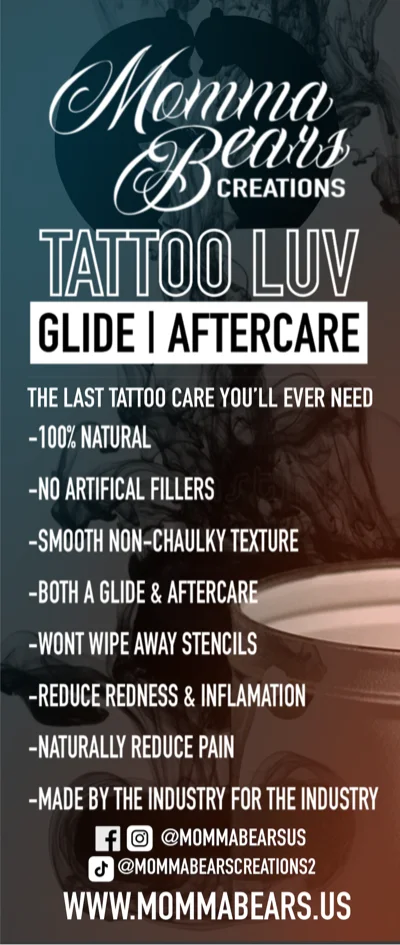
Research Note & Disclosure: I’ve used multiple aftercare products across my different tattoos over the past several years, from petroleum-based ointments to natural balms. This post draws from my personal healing experiences, conversations with tattoo artists about what they recommend, dermatological research on wound healing, and product comparisons. Full disclosure: My family owns Momma Bears Creations, which makes Tattoo Luv, a natural tattoo aftercare product. I’ll discuss it alongside other options, but I’ll be transparent about the family connection and include multiple approaches so you can make informed decisions.
Why Aftercare Product Choice Matters
I used to think aftercare products were all basically the same—just something to keep my fresh tattoo moisturized while it healed. After getting multiple tattoos and trying different products, I’ve learned that what you use during healing affects how your tattoo looks long-term, how comfortable the healing process is, and even whether you develop complications.
The aftercare product debate centers on a few key questions:
- Petroleum-based (Aquaphor, A&D, Vaseline) vs. natural alternatives?
- Thick ointments vs. lighter lotions?
- Fragrance-free vs. essential oils?
- What your artist recommends vs. what actually works for your skin?
Standard Aftercare Guidelines
According to the Association of Professional Piercers (APP), which sets industry standards for body modification aftercare, basic tattoo aftercare follows these principles:
Core Aftercare Steps:
- Keep it clean: Wash gently 2-3 times daily with fragrance-free antibacterial soap
- Keep it moisturized: Apply thin layer of aftercare product
- Protect from irritants: Avoid soaking, swimming, direct sun, tight clothing, picking/scratching
- Watch for infection: Monitor for excessive redness, swelling, pus, fever, red streaks
Healing Timeline:
- Initial healing (outer layer): 2-3 weeks
- Deep tissue healing: 3-6 months
- Full settling of ink: 6-12 months
Common Aftercare Products: My Experiences
Petroleum-Based Ointments
Products: Aquaphor, A&D Ointment, Vaseline
My Experience: My first two tattoos, I used Aquaphor as my artist recommended. It worked—tattoos healed fine—but I had issues I didn’t realize were avoidable:
- Heavy, greasy feeling
- Stained clothing and bedsheets
- Felt like it trapped heat and moisture (uncomfortable)
- Needed frequent reapplication because it wiped off easily
Advantages:
- Widely recommended by artists (familiar, established track record)
- Readily available (drugstores, cheap)
- Creates moisture barrier
- Proven healing for many people
Disadvantages:
- Petroleum derivatives (some people prefer to avoid)
- Can clog pores (may cause breakouts, especially on acne-prone skin)
- Greasy, uncomfortable texture
- Wipes off easily on clothing
- Can be too occlusive (trapping bacteria if over-applied)
According to Healthline’s aftercare guide, petroleum-based products work by creating a barrier that locks in moisture, but some dermatologists suggest they may be too occlusive for optimal healing.
Fragrance-Free Lotions
Products: Lubriderm Unscented, Aveeno Unscented, Cetaphil, CeraVe
My Experience: After the greasy feel of Aquaphor, I tried unscented Lubriderm for a shoulder piece. It absorbed better and felt lighter, but required very frequent application because it wasn’t thick enough for deep moisturization.
Advantages:
- Lighter, more comfortable texture
- Absorbs into skin
- Less clothing staining
- Good for later healing stages (after first week)
Disadvantages:
- May not provide enough moisture for initial healing
- Needs frequent reapplication (4-5+ times daily)
- Some contain alcohols that can dry skin
- Not as protective as thicker products
Best Used: Later healing stages (after first week) or combination approach (thick ointment first week, then transition to lotion)
Natural Oil-Based Balms
Products: Coconut oil, shea butter-based balms, natural aftercare products
My Experience: I discovered natural alternatives when researching options beyond petroleum. What I found:
- Natural oils (coconut, jojoba, shea butter) moisturize effectively without petroleum
- Lighter feel than Aquaphor but more protective than lotion
- No synthetic ingredients or fragrances (important for sensitive skin)
- Some include ingredients specifically beneficial for healing (vitamin E, hemp seed oil, tea tree oil)
Tattoo Luv (Full Disclosure: Family Product)
Full Transparency: Tattoo Luv is made by my family’s business, Momma Bears Creations. I’m biased because it’s our product, but I’ve also genuinely used it on my own tattoos, so I can share honest experience.
What It Is:
- Dual-purpose tattoo glide (used during tattooing) and aftercare balm
- 100% natural ingredients: shea butter, jojoba oil, cocoa butter, babassu oil, vitamin E, hemp seed oil, sweet orange, tea tree, bergamot, helichrysum essential oils
- No petroleum, parabens, or synthetic fragrances
- Made in small batches in Enola, PA
Ingredients Breakdown:
- Shea Butter: Rich moisturizer, vitamins A/E/F, soothes appearance of redness
- Jojoba Oil: Mimics skin’s natural sebum, absorbs easily, won’t clog pores
- Cocoa Butter: Protective moisture barrier, antioxidants
- Vitamin E: Antioxidant, conditions skin
- Hemp Seed Oil: Omega-3 and omega-6 fatty acids, soothes appearance of redness
- Tea Tree Oil: Traditional natural skincare ingredient with cleansing properties
- Essential Oils: Natural aromatics (sweet orange, bergamot, helichrysum)
My Personal Experience: I’ve used Tattoo Luv on my past three tattoos (yes, using family product, but also genuinely found it worked better for me):
What I liked:
- Absorbed better than Aquaphor (less greasy feeling)
- Lasted longer than regular lotion (didn’t need constant reapplication)
- Pleasant natural scent (vs. petroleum smell or fragrance-free)
- Didn’t stain my clothes as badly as Aquaphor
- Felt more comfortable on my skin during healing
Realistic Assessment:
- More expensive than drugstore Aquaphor ($12-15 for 2oz vs. $5-8 for Aquaphor tube)
- Contains essential oils (some people prefer completely oil-free, or have citrus sensitivity)
- Less widely available (online through Carlisle Creative Vibes or direct from tattooluv.com)
- Natural products may not work for everyone (individual skin chemistry varies)
Artist Perspective: Mike Mavretic from Skin Deep Tattoo LLC in Lebanon, PA, is a Tattoo Luv sponsored artist. Here’s what he shared about using it professionally:
“When consulting with this company… they were very attentive to my needs and my customers needs. They listened and formed together what I call ’the luv sauce’. This stuff doesn’t wipe away stencils, clog up tubes, natural… the very first piece I tattooed using this stuff; both the client and I noticed huge difference… I’m hooked…”
Learn more about Tattoo Luv: www.tattooluv.com
Why I’m mentioning our product: Not to push sales, but because I genuinely believe natural alternatives are worth considering if petroleum-based products haven’t worked well for you, or if you prefer natural ingredients. There are other natural tattoo balms on the market too—research what works for your values and skin type.
What Actually Matters in Aftercare Products
Key Criteria Based on Research
1. Non-Comedogenic (Won’t Clog Pores): According to Medical News Today, fresh tattoos are essentially open wounds. Products that clog pores can trap bacteria and cause infections or breakouts.
- Jojoba oil: non-comedogenic
- Shea butter: minimally comedogenic
- Heavy petroleum: can be comedogenic on some skin types
2. Fragrance-Free OR Naturally Scented: Artificial fragrances can irritate healing skin. However, some natural essential oils have traditional uses in skin care. Personal sensitivity varies.
3. Moisturizing Without Over-Moisturizing:
- Too little moisture: scabbing, cracking, ink loss
- Too much moisture: prolonged healing, trapped bacteria, soggy scabs
The balance: Thin layers, reapplied as needed (typically 2-4 times daily depending on product)
4. Your Skin Compatibility: What works for one person may not work for another:
- Oily skin may prefer lighter products
- Dry skin may need richer moisturizers
- Sensitive skin may react to certain ingredients
- Previous experience with skincare products guides choices
Application Best Practices
How to Apply Aftercare Products
Clean Hands Always: Wash hands thoroughly before every application (most important rule)
Less Is More:
- Rice grain size for area the size of your palm
- You should still see your tattoo through the product
- Over-application delays healing and causes issues
Pat, Don’t Rub:
- Gently pat product onto skin
- Don’t rub aggressively (can irritate fresh tattoo)
- Let it absorb naturally
Frequency:
- Initial days (1-3): 3-4 times daily
- Later healing (4-14): 2-3 times daily
- After two weeks: as needed for dryness
Signs You’re Using Too Much Product
- Tattoo looks constantly wet or shiny
- Scabs are white and soggy instead of dry
- Skin feels perpetually greasy
- Healing taking longer than expected (beyond 3 weeks for outer layer)
Signs You Need More Moisture
- Skin feels tight and dry
- Premature scab cracking
- Excessive flaking
- Tattoo looks dull and ashy
What Doesn’t Work (Avoid These)
Products to Avoid
Neosporin or Triple Antibiotic Ointment: According to Byrdie’s aftercare article, many people are allergic to ingredients in these ointments, and they can pull ink out of fresh tattoos.
Scented Lotions: Fragrances irritate healing skin—stick to fragrance-free or naturally scented options.
Alcohol-Based Products: Dry out skin and delay healing.
Heavy Lanolin Products: Common allergen, can clog pores.
Products with Dyes: Artificial colors serve no purpose and may irritate.
Healing Issues and When to See a Doctor
Normal Healing vs. Infection
Normal Healing:
- Mild redness around tattoo (decreases over first week)
- Some swelling (especially in sensitive areas)
- Scabbing and flaking (days 3-10 typically)
- Itching (very common, do NOT scratch)
- Dull appearance before ink settles (first 2-3 weeks)
See a Doctor If:
- Excessive redness spreading beyond tattoo area
- Significant swelling that worsens after first 2-3 days
- Pus or discharge (yellow, green, or foul-smelling)
- Fever or feeling unwell
- Red streaks extending from tattoo (sign of blood infection)
- Extreme pain beyond normal tattoo soreness
Don’t wait if you suspect infection—fresh tattoos are open wounds and infections can escalate quickly.
My Aftercare Product Recommendations
Based on Personal Experience
If You Want Traditional/Widely Used:
- Aquaphor Healing Ointment (fragrance-free)
- Follow artist’s instructions exactly
- Works for most people, proven track record
If You Want Natural Alternative:
- Tattoo Luv (yes, family product, but genuinely recommend)
- Other natural tattoo balms with shea/jojoba base (research reviews)
- Coconut oil (pure, unrefined) for simple natural option
If You Have Sensitive/Acne-Prone Skin:
- Lighter lotions: Lubriderm Unscented, CeraVe
- Avoid heavy petroleum products
- Test products on small area first
If You Want Budget-Friendly:
- Aquaphor (most affordable, widely available)
- Plain coconut oil (cheap, works for many)
My Current Approach: I use Tattoo Luv because I prefer natural ingredients, I like supporting family business, and it genuinely works better for my skin than petroleum products. But I acknowledge I’m biased—what matters most is finding what works for YOUR skin and YOUR healing.
The Bottom Line
No single aftercare product works perfectly for everyone. What matters:
- Keep it clean (wash gently, regularly)
- Keep it moisturized (thin layers, not over-saturated)
- Protect from irritants (sun, water, bacteria, scratching)
- Listen to your artist (they’ve seen thousands of tattoos heal)
- Pay attention to your body (how your skin responds guides adjustments)
Your tattoo will likely heal fine with almost any reasonable aftercare product, as long as you follow proper cleaning, moisturizing, and protection practices.
What aftercare products have worked (or not worked) for you? Share your experiences in the comments!
Resources
Aftercare Guidelines:
- Association of Professional Piercers
- Healthline - Tattoo Aftercare
- Byrdie - Tattoo Aftercare Tips
- Medical News Today - Tattoo Aftercare
Products Mentioned:
- Tattoo Luv - Natural tattoo glide and aftercare
- Carlisle Creative Vibes - Retail partner for Tattoo Luv
- Momma Bears Creations - Family business making Tattoo Luv
When to See a Doctor:
- Excessive redness or swelling
- Pus or discharge
- Fever or feeling unwell
- Red streaks from tattoo
- Any concerns about infection
InkedWith is written by tattoo collectors for tattoo collectors. We share honest experiences and research to help you make informed decisions. Disclosure: The author’s family owns Momma Bears Creations, makers of Tattoo Luv. We’ve been transparent about this connection and included multiple aftercare options for comparison.
Recommended Care